
Front pageCyber Attacks & Incidents
Maileva breach exposes personal data of 22 million people in France
A mid-September cyberattack on La Poste subsidiary Maileva exposed names and postal addresses of 22 million people; the CNIL was notified and Paris prosecutors are investigating.
- Filed
- Read
- 2 min read
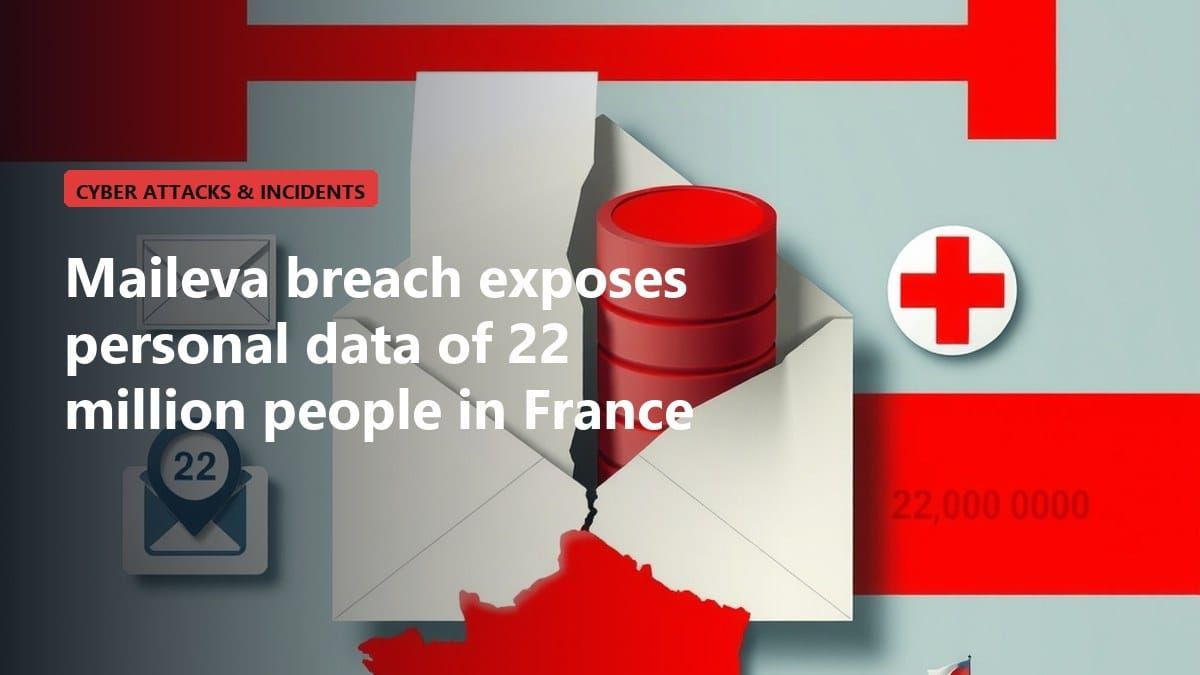
FranceInfo reports that a hacker infiltrated La Poste’s Maileva mail‑out platform in mid‑September 2026, gaining access to personal information contained in letters sent on behalf of its business clients. The breach affected an estimated 22 million individuals, including residents of social‑housing agencies and patients of hospitals such as Hôpital Foch.
What happened
Maileva’s systems were compromised sometime in mid‑September. On 23 September the service was voluntarily shut down to contain the intrusion and prevent further exposure. After six days of downtime, the platform was restored on 29 September, with Docaposte confirming full operational status.
Data exposed
According to La Poste, the stolen data are the first names, surnames and postal addresses of the people concerned; bank details are not affected. Some client organisations say that administrative or financial details contained in letters, such as invoice amounts, may also have been read. The sheer volume of exposed records raises concerns about future misuse.
Who is affected
Anyone whose information appeared in mailed documents processed by Maileva is potentially at risk. This includes members of the social‑housing cooperative Flandre Opale Habitat, who were notified in early November, and patients of Hôpital Foch, warned that payment‑reminder letters sent between 9 September and 23 September may have been read.
Why it matters
Maileva is a critical service used by public agencies and private organisations to dispatch official correspondence. The breach demonstrates how a single service‑provider compromise can expose personal data of millions, creating opportunities for phishing, identity theft and targeted scams. The French data‑protection authority (CNIL) has been notified and a judicial investigation launched.
How ordinary users can protect themselves
While the stolen data have not been confirmed as used for fraud, individuals should treat the breach as a potential precursor to phishing attempts. Users are advised to:
- Be wary of unsolicited emails or messages that reference recent mail from La Poste, especially those requesting personal or financial information.
- Monitor bank statements and credit reports for unexpected activity.
- Consider changing passwords on online accounts that use the same email address found in the breach, and enable two‑factor authentication where possible.
Antoine Hautin of cybersecurity firm Almond described the incident as “a classic scenario targeting a service provider to steal databases.”
Sources
- flandreopalehabitat.fr (official)
- hopital-foch.com (official)
- solutions-numeriques.com (official)
- France: cyberattaque (bing)
- France: cyberattaque (bing)
- France: cyberattaque (bing)
- France: cyberattaque (bing)
- France: fuite de données (bing)
This brief was prepared with AI assistance from the sources above and reviewed by our editors.
Sources
Keep reading

Reported Malicious QBase Update Prompts Temporary Grounding of German Military Drones
Quantum Systems confirmed a breach of its QBase update infrastructure that forced the German Bundeswehr to ground its drones for a day in November 2026.
Italy Fines Meta €805 Million Over Facebook's Unauthorized Android Photo-Gallery Access
Italy’s data‑protection authority fined Meta €805 million after its Facebook Android app accessed users’ gallery photos and videos without clear consent, affecting roughly 20 million Italians.
Fullerton Health Breach Exposes Records of 140,000 Migrant Workers in Singapore
Fullerton Health says about 140,000 work pass holder records, including names, foreign ID numbers and addresses, were exposed in a breach of a server supporting a migrant worker care programme.