
Turkey's NATO Balancing Act: Untangling the Cyber Dependencies Behind the Ankara Summit
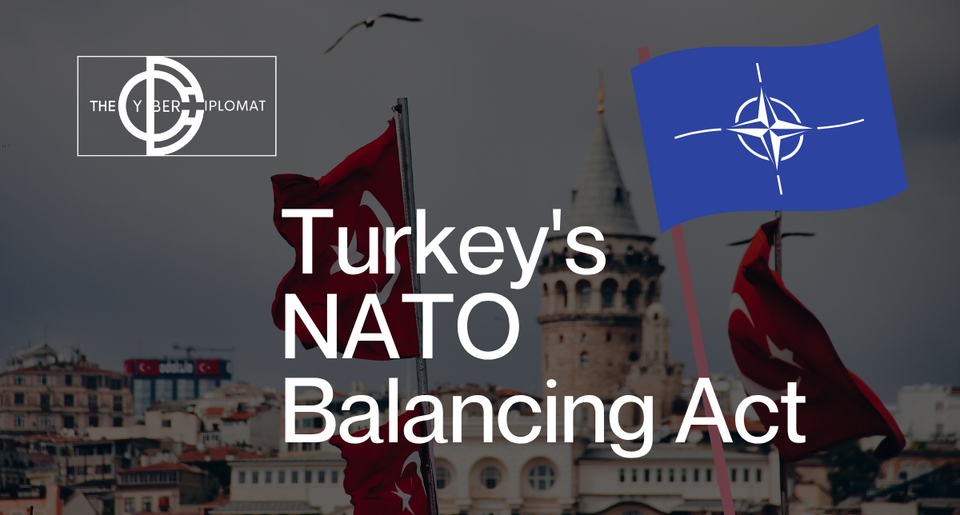
As NATO leaders gather in Ankara on July 7–8, 2026, for what officials are calling the alliance's most consequential summit in years, the choreography around it — a draft declaration on Article 5 commitments, €70 billion pledged for Ukraine, a defense industry forum promising billions in new contracts — sits atop a messier and less visible story: the tangle of digital and technological dependencies binding Turkey, and NATO more broadly, to vendors and networks that Western security officials increasingly view as liabilities.
The protests visible in Ankara and Istanbul in the run-up to the summit — including a march by the Communist Party of Turkey that authorities met with more than 100 detentions — are the loudest, most visible form of friction. But the quieter argument, playing out in NATO working groups and cybersecurity reports rather than in the streets, is about something structural: how much of the alliance's — and Turkey's — digital backbone still runs through equipment, networks, and supply chains that NATO's own members consider a security risk.
Why Turkey matters to this conversation
Turkey is not a peripheral NATO member. It fields the alliance's second-largest standing army, contributes roughly 3,000 personnel and a range of platforms to NATO missions, commands the Black Sea Task Force through 2028, and is slated to lead NATO's Allied Reaction Force starting in 2028. Turkish officials have also been vocal about building out capabilities in artificial intelligence, cyber defense, and space, positioning Ankara as one of the alliance's "fastest-adapting" members on emerging-domain threats.
That combination — hard military weight plus growing digital ambition — is exactly why Turkey's technology choices carry outsized consequences for the alliance's collective cyber posture. NATO's own doctrine, especially after the 2016 Warsaw declaration naming cyber a domain of warfare, treats an ally's network vulnerabilities as everyone's problem. A compromised node in one member's telecom backbone is a potential entry point into shared intelligence, logistics, and command channels.
The Huawei problem: entanglement, not exaggeration
The clearest, most concrete "cyber dependency" tying Turkey (and several other NATO members) into a contested supply chain is Chinese telecom equipment — chiefly Huawei. Turkish telecom operator Türk Telekom signed an agreement with Huawei to help build out Turkey's 5G network, and Turkey is one of a small group of NATO members — alongside Hungary, Iceland, and the Netherlands — where Huawei remains embedded in national 5G infrastructure.
Western security agencies have argued for years that this is not a hypothetical risk. Under Chinese law, companies operating in China are obligated to cooperate with state intelligence requests, meaning data traversing Huawei-built infrastructure is legally exposed to state access in a way that Western vendors' equipment, in theory, is not. NATO's supreme allied commander for Europe warned years ago that if Huawei equipment sits inside defense communications systems, the U.S. military would simply stop communicating over those channels — a blunt illustration of how quickly a "cost-saving" vendor choice can turn into an operational firewall between allies.
This is not just a Turkey story. Germany, Spain, and Italy have all faced similar pressure, and reporting from mid-2026 indicates the U.S. State Department has been pushing NATO members — Germany especially, but implicitly others — to use their now-expanded defense budgets (member states agreed to raise spending to 5% of GDP, with 1.5 percentage points earmarked for "defense-related" categories including network security) to physically rip out Chinese-made network equipment and replace it with trusted vendors. The reception among allies has been lukewarm rather than enthusiastic, partly because replacement is expensive and partly because Europe remains internally split: the European Commission has labeled Huawei and ZTE "high-risk suppliers" and wants a tighter, mandatory Cybersecurity Act, but Germany and Spain have resisted an EU-wide ban, wary of both the cost and of provoking retaliation from Beijing.
Beyond hardware: information operations as a cyber-adjacent dependency
The entanglement isn't purely about routers and base stations. Analysts have also flagged Turkey's use of state-linked or state-adjacent media operations — most notably reporting connecting the English-language outlet "Clash Report" to a Turkish media firm with ties to figures close to President Erdoğan — as a related vulnerability. The concern here is less about data exfiltration and more about information integrity: content that blends legitimate reporting with narratives favorable to Ankara's foreign-policy interests, amplified by Western audiences who don't know its provenance. NATO's cohesion, several of these assessments argue, depends as much on a shared, trustworthy information environment among allies as it does on hardened networks.
What NATO is actually doing about it
The alliance isn't standing still. Its updated Cyber Defense Pledge — revised in 2026 — now requires mandatory cybersecurity maturity assessments across critical infrastructure sectors, standardized 24-hour incident reporting, mandatory joint cyber exercises, and more transparent reporting on how much members are actually spending on cyber defense. The NATO Cyber Security Centre in Mons, Belgium, is being expanded into a full Integrated Cyber Defence Centre by 2028. And AI, cybersecurity, and reducing dependence on Chinese technology are all expected to be explicit agenda items at the Ankara summit itself, alongside the defense-industrial forum on July 7.
There's also a slower-moving structural fix already underway, mostly by accident: as European operators upgrade from 4G to legacy-free 5G, aging Huawei-era equipment gets swapped out anyway as part of normal infrastructure refresh cycles, which softens the political cost of "banning" a vendor into simply "not renewing" a contract — the approach France has taken.
How the "de-entanglement" argument actually breaks down
If the goal is reducing dependency, the debate among policymakers and analysts tends to split into a few distinct approaches, each with real trade-offs:
1. Mandatory vendor bans (the hawkish position). Countries like Australia, Japan, and the U.K. have banned Huawei/ZTE outright from telecom infrastructure. Proponents argue this is the only approach that removes the risk rather than managing it, and that NATO's expanded defense budgets make the cost politically absorbable now. Critics counter that outright bans are expensive to implement quickly, invite Chinese economic retaliation, and in Turkey's case specifically, risk pushing Ankara — which already balances relationships with Russia, the Gulf states, and China — further from Western alignment rather than closer to it.
2. "Trusted vendor" designations and gradual replacement (the EU's preferred path). The EU's 5G Toolbox and proposed Cybersecurity Act updates favor risk-based, non-mandatory guidance: encourage trusted vendors (Ericsson, Nokia), restrict "high-risk" ones from core network functions, but don't force a blanket ban. This is politically easier but has produced uneven results — only around 60 of Europe's roughly 100 mobile networks currently have "clean," Huawei-free status.
3. Using defense-spending increases as leverage. Framing network-hardware replacement as a legitimate NATO defense expenditure (rather than a separate telecom-policy fight) is the newest tactic, floated by U.S. officials in mid-2026. It reframes "ripping out Huawei" as burden-sharing rather than as a bilateral grievance against any one country, which could make it easier for Turkey or Germany to justify domestically.
4. Diversifying supply chains and investing in alternatives (the long-game position). Some technologists argue the durable fix isn't a ban at all, but building genuinely competitive non-Chinese alternatives — including Open RAN architectures — since price and technical performance, not politics, are what actually drove many countries toward Huawei in the first place. The concern with this approach is timeline: it's a multi-year industrial project, not something that can be finished before the next summit.
None of these are mutually exclusive, and NATO's current posture is really some mix of all four: pressure plus incentives plus slow attrition of legacy contracts plus a longer bet on European vendors.
The bigger picture
Turkey's position going into Ankara is genuinely dual. Ankara is positioning itself — accurately, in the eyes of many alliance planners — as a rising military-technological power central to NATO's southern flank, Black Sea posture, and drone/AI capabilities. At the same time, it remains one of the alliance's more exposed members on the specific question of Chinese-origin telecom infrastructure, alongside a handful of other NATO states.
"De-entangling" fully is less a single decision than a years-long infrastructure and diplomatic project — one that intersects with defense spending targets, EU-China relations, and Turkey's broader balancing act between Washington, Moscow, and Beijing. The Ankara summit is likely to produce declarations and pledges on this front, as it has on defense spending and Ukraine support. Whether pledges convert into replaced hardware and hardened networks — the same "delivery, not declaration" standard that observers are applying to NATO's broader Article 5 commitments — is the real test, and one that will take years, not a two-day summit, to resolve.
This piece synthesizes reporting and analysis from outlets including the Atlantic Council, Council on Foreign Relations, the German Marshall Fund, NATO's CCDCOE, Reuters, and regional coverage of the July 2026 Ankara summit. It reflects the range of positions currently debated among NATO members and analysts rather than a single settled policy conclusion.
Member discussion