
Cal Water Says Breach Was Contained to One Customer Account — But the Bigger Story Is What Iran-Linked Hackers Are Testing
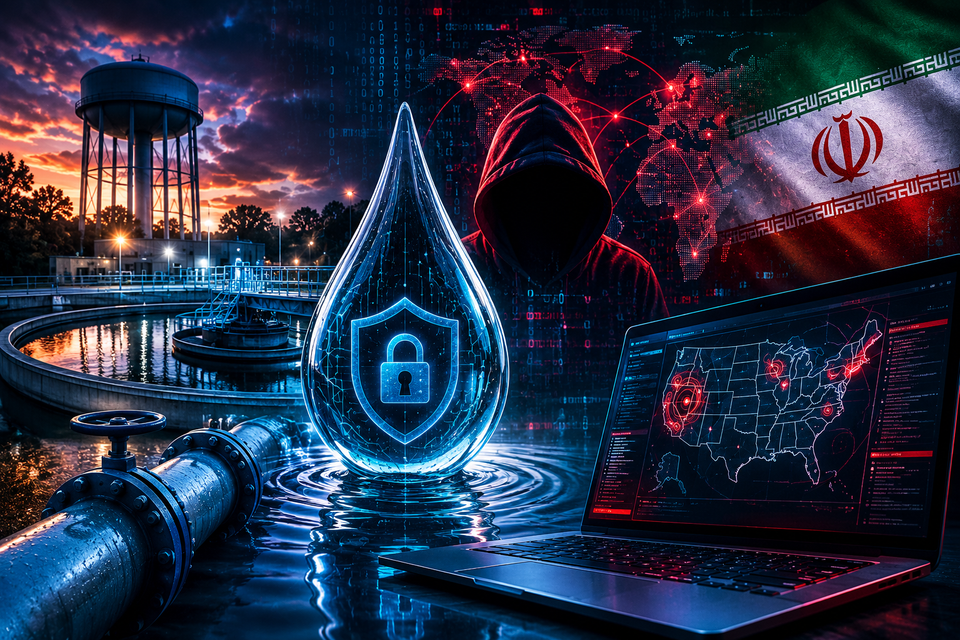
An investigation into a June cyberattack claimed by the Iran-linked group Handala found no evidence of access to Cal Water's core systems. Security researchers say the incident still fits a troubling pattern of escalating probes against U.S. water infrastructure.
California Water Service has wrapped up its investigation into a June 11 cyberattack claimed by the Iran-linked hacking group Handala, and the company's conclusion is notably narrower than the hackers' own boasts: a single customer's online account was accessed using stolen credentials, and a related third-party GPS correction tool was reached, but the utility's internal technology and operational systems were not breached. Mandiant, the Google Cloud-owned incident response firm that supported the investigation, said it found no evidence of activity inside Cal Water's core IT or operational technology environments.
That's a meaningfully different picture than the one Handala presented when it went public. The group claimed it had gained access deep enough to disrupt water service to American cities and chose not to, framing the intrusion as a "warning" issued two days after U.S. strikes damaged water infrastructure in Sirik, Iran. Handala also published roughly 5 gigabytes of data it said came from Cal Water systems, and outside researchers who reviewed the leak identified two systems the group appears to have actually reached: a customer billing database containing names, addresses, phone numbers, and payment histories, and an internal GPS base station platform called RTKBase, used by field crews to support water infrastructure work across multiple Cal Water districts. Analysts assessed the RTKBase system as a likely entry point or pivot used to reach the billing environment — IT and customer-support infrastructure, not the industrial control systems that actually operate treatment or distribution.
A Familiar Playbook, and a Reason to Stay Skeptical of "We Chose Not To"
Handala, also tracked under names including Banished Kitten and Homeland Justice, has been linked by U.S. officials to Iran's Ministry of Intelligence and Security and has been active since at least 2008. It has claimed responsibility for a string of high-profile incidents this year, including accessing FBI Director Kash Patel's personal email in March and a cyberattack against medical device maker Stryker that same month — an operation that, notably, did escalate from data theft into a destructive wiper attack disrupting manufacturing and shipping.
That history is why several threat intelligence firms are treating Handala's claim of restraint with real caution rather than taking it as reassurance. The group has previously moved from an initial data-theft disclosure to a more destructive follow-on within the same campaign, and its toolkit reportedly includes custom wiper malware capable of overwriting system data. Researchers have characterized the water-sector targeting as consistent with a broader doctrine of going after "life-sustaining" infrastructure specifically for its psychological and societal impact — the value isn't necessarily in disrupting service, it's in demonstrating the capability to.
At the same time, multiple analysts have also noted that Handala has a track record of overstating what it actually achieved, and that nothing in this incident indicates the group has developed the ability to manipulate the industrial systems — SCADA controls, programmable logic controllers, pump or treatment systems — that would be required to actually interrupt water delivery.
Part of a Broader Pattern Against U.S. Water Utilities
The Cal Water incident isn't an isolated data point. It follows a March attack on a Utah-based water utility, Sage Water Resources, which reported it had fully remediated its systems by late June, and it lands against the backdrop of standing warnings from the Cybersecurity and Infrastructure Security Agency and the FBI about Iran-linked actors probing U.S. water and energy facilities. CISA's advisories this year specifically flagged water-sector technology as a target of interest for Iranian state-linked groups, describing a wartime-tempo campaign against the sector's historically under-resourced cybersecurity posture.
That resourcing gap is a big part of why incidents like this one draw outsized attention even when the technical impact turns out to be limited. Water utilities frequently operate with converged or loosely segmented IT and operational technology environments, smaller security budgets than other critical infrastructure sectors, and — as this incident illustrates — dependencies on third-party platforms (in this case, a GPS correction service) that can serve as a stepping stone into more sensitive systems even when they aren't part of the utility's core network.
What Cal Water's Findings Do and Don't Resolve
For Cal Water, which serves roughly two million customers across about 100 California communities, the investigation's conclusion is genuinely good news on the question that mattered most in the moment: there's no evidence the attackers had, or could have used, the access needed to affect water delivery. The company said the compromised customer account did not provide access to billing systems and that no payment information was exposed, and that the GPS-related third-party site it accessed doesn't contain confidential or sensitive data.
What the investigation doesn't erase is the exposure of customer personal information — names, addresses, phone numbers, and account details tied to the leaked billing data — which leaves affected customers facing a real increase in phishing and social-engineering risk regardless of how contained the technical breach turned out to be. It also doesn't change the broader signal security researchers are drawing from the incident: that Iran-linked groups are actively testing the perimeter of U.S. water infrastructure, using this kind of low-cost, high-visibility intrusion as both an intelligence-gathering exercise and a geopolitical messaging tool — and that the gap between "we could have caused serious harm" and actually doing so is one utilities can't assume will hold indefinitely.
Based on reporting from the Chico Enterprise-Record/Tribune Content Agency, Cybersecurity Dive, SecurityWeek, Industrial Cyber, TechRadar, and Newsweek, current as of early July 2026.
Member discussion