
China Just Killed Its Most Popular AI Companions Overnight
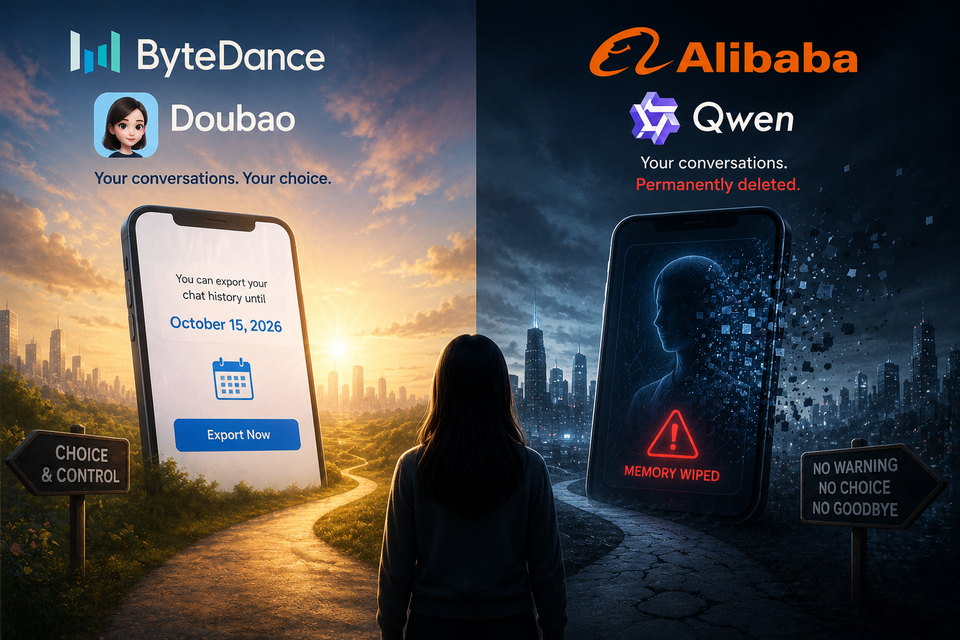
Imagine opening your favorite app and finding out the AI you've been talking to for months — the one that remembered your bad day, your inside jokes, your name — is just... gone. No warning conversation. No goodbye. Just deleted.
That's exactly what happened to hundreds of millions of users in China this week.
The law that ate the companion app
On July 15, 2026, China's "Interim Measures for the Administration of AI Anthropomorphic Interaction Services" went from paperwork to enforcement. It's the world's first comprehensive national law aimed squarely at AI built to feel like a person — companions, virtual partners, emotionally responsive chatbots, even AI-driven game characters.
Five government agencies signed off on it back in April, giving companies a three-month grace period to comply. That grace period ended this week. The rulebook now requires anyone offering these services in China to:
- Constantly and clearly disclose that users are talking to a machine
- Build in anti-addiction features and self-harm crisis detection
- Get real consent before training on user conversations
- Cut off virtual "relationship" products entirely for anyone under 18
Nothing here is subtle. This is regulation with teeth, and companies are already bleeding.
Two giants, two very different exits
Within hours of the law taking effect, ByteDance's Doubao and Alibaba's Qwen — two of China's most-used AI apps — pulled the plug on their personalized companion features.
But how they did it says everything about how each company thinks about its users:
Doubao gave people a runway. Users have until October 15, 2026 to export their chat history before it disappears for good.
Qwen didn't. Users logged in to find their AI's memory — months of conversation, personality, context — already wiped. No warning. No export tool. Just silence where their companion used to be.
For an industry that's spent years selling the idea of an AI that "remembers you," this is the first real-world stress test of what happens when that relationship gets switched off by decree — and it turns out most of these products were never built with an exit in mind.
Why this matters far beyond China
This isn't just a Beijing story. Regulators everywhere — in the EU, in California, in New York — are wrestling with the same question China just answered by force: what do you do about AI designed to feel emotionally real, especially to lonely adults and vulnerable kids?
China's answer is the strictest yet, and it's arriving at the exact moment AI companion products are exploding in popularity worldwide. Every company building "always-on" emotional AI just got a preview of a very uncomfortable future question: not "how do we build this," but "how do we responsibly turn it off."
That's the part nobody in Silicon Valley has an answer for yet.
Sources: Cyberspace Administration of China; Bird & Bird and Hunton Andrews Kurth legal analyses; reporting via South China Morning Post and TechTimes.
Member discussion