
PhilSec 2026 Returns to Manila — But the Battlefield Has Never Been More Consequential
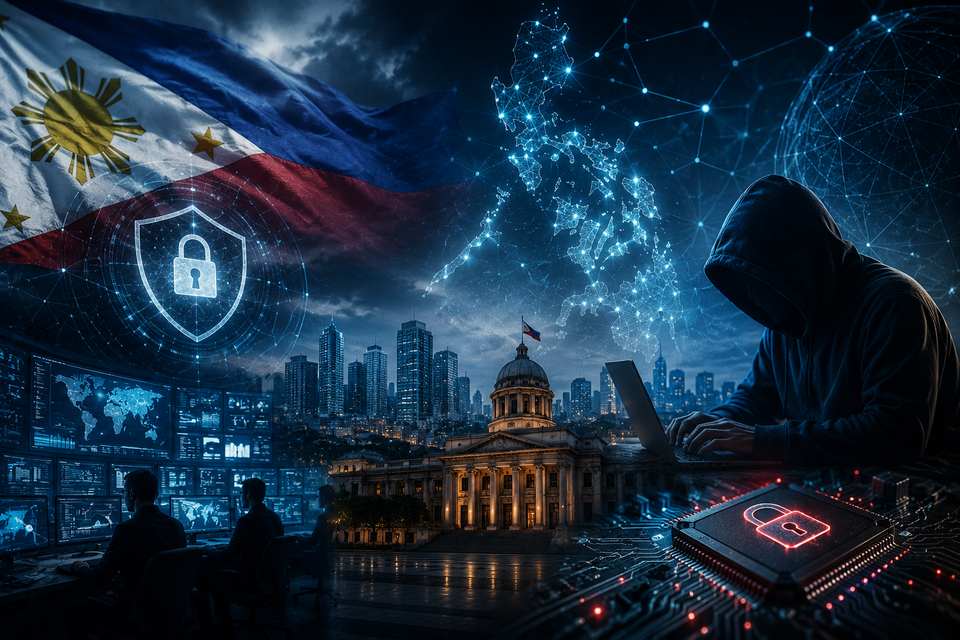
When the Philippines' foremost cybersecurity summit, PhilSec, convenes at the Manila Marriott Hotel on 30 June and 1 July 2026, it will do so against a backdrop of cascading breaches, geopolitical cyberwarfare, and a legal architecture that has both protected citizens and been weaponised against them. The sixth edition of the summit is not just a marquee industry event — it is, in many ways, an emergency session for a country that has spent the past three years discovering, the hard way, what it means to be on the digital front line.
The Scale of What PhilSec Is Walking Into
The Philippines remains among the top 10 most targeted nations globally for cyberattacks, with small and medium enterprises and critical infrastructure sectors facing the brunt of advanced phishing, ransomware, and cloud-based exploits. The numbers are not abstract.
Data breaches rose by 49% in the third quarter of 2025 alone, exposing over 52 million credentials. The Philippine shadow economy has entered an era of industrialised deception, where AI-driven tools enable automated fraud, deepfakes, voice cloning, and data brokerage at machine speed, fuelling large-scale cybercrime and espionage. This environment is sustained by mass data breaches, underground markets for stolen identities and mule accounts, and state-linked cyber operations that pre-position malware within critical infrastructure.
The cybersecurity market is responding to this threat with money — the sector, valued at USD 261.5 million in 2025, is on course to nearly triple by 2032 — but market growth and institutional readiness are not the same thing, and the gap between them is where ordinary Filipinos have paid the heaviest price.
A Catalogue of Catastrophe: The Breaches That Built the Crisis
Understanding why PhilSec 2026 carries the institutional weight it does requires understanding the specific failures that preceded it.
The journey begins with what remains the single most damaging data breach in Philippine electoral history. In 2016, the "ComeLeak" incident saw hackers expose the personal information of over 55 million voters, making it one of the largest government breaches globally. The Commission on Elections not only failed to protect the data — it failed to notify the regulator or the public promptly, an accountability failure that the National Privacy Commission later documented in detail.
The state institutions did not learn quickly enough. In April 2023, more than 800 gigabytes of applicant and employee records from the Philippine National Police, the National Bureau of Investigation, the Bureau of Internal Revenue, and the Special Action Force were compromised. Then, five months later, came the breach that shocked even those already tracking the pattern.
The Medusa ransomware attack on PhilHealth in September 2023 resulted in 430 gigabytes of stolen data. What initially appeared to affect thousands of members was eventually confirmed to have impacted 42,089,693 people — a number approaching half the country's entire population. PhilHealth admitted that it was using expired antivirus software at the time of the breach. The Medusa group demanded a $300,000 ransom. PhilHealth refused to pay, and the data was published online, leaving tens of millions of Filipinos with their health records, hospital bills, and identification documents permanently exposed.
The Philippine Statistics Authority suffered its own data breach shortly after, filing a breach notification report with the National Privacy Commission. Similar intrusions followed against the Department of Science and Technology and the websites of both chambers of Congress. The pattern was unmistakable: Philippine government agencies were systematically underprepared, and the attackers knew it.
The China Dimension
The threat landscape facing the Philippines is not simply criminal. It is geopolitical — and that distinction shapes everything about how the country must respond.
The volume of malicious cyber activity against the Philippines quadrupled in the first quarter of 2024 compared to the same period in 2023. The cyberattacks consisted of a combination of hack-and-leak operations (55%), distributed denial-of-service attacks (10%), and misinformation and influence campaigns (35%). The main targets were government agencies (80%) and educational institutions (20%).
The Philippines' cybersecurity policy is increasingly informed by the barrage of attacks it faces from China-based actors regarding the intensifying South China Sea territorial dispute. Its internet infrastructure is particularly vulnerable because it is well-developed but under-defended, and owned in part by Chinese government-linked telecommunications companies. Several undersea cables connecting the Philippines to the global internet are also partially owned by state-connected Chinese firms — a major concern as South China Sea tensions rise, as China could theoretically leverage control over cables for surveillance or restricted access.
In January 2025, Philippine law enforcement arrested Chinese national Deng Yuanqing along with two Filipinos on suspicion of spying, with the group accused of mapping critical infrastructure including military bases that the United States has access to. Eleven more Chinese nationals were arrested in subsequent operations.
Early in 2026, a Philippine Coast Guard vessel reported a cyber intrusion on its government workstation, highlighting how even national security operations are vulnerable. The intersection of physical territorial confrontation in the South China Sea and digital operations targeting Philippine defence and government infrastructure is no longer a theoretical risk — it is the daily operating environment.
PhilSec 2026: Unprecedented Institutional Backing
Against this backdrop, the institutional composition of PhilSec 2026 is significant. The simultaneous backing of the Department of Information and Communications Technology (DICT), the Cybercrime Investigation and Coordinating Center (CICC), the Philippine National Police Anti-Cybercrime Group (PNP-ACG), the Armed Forces of the Philippines (AFP), and the Philippine Coast Guard (PCG) in a single civilian summit is not precedent — it is a statement that the civilian-military boundary in cybersecurity is dissolving, as it has in every country where serious threats have materialised.
The inauguration of the summit by the DICT's Officer-in-Charge and Undersecretary for Cybersecurity signals that this is no longer a vendor fair or an IT networking event. It is a policy moment. The National Cybersecurity Plan 2023–2028 remains in place, with 2025 milestones including promoting capacity-building, threat detection, incident response, and public-private collaboration. The 2026 National Budget includes measures to strengthen cybersecurity through the DICT, the CICC, and the National Privacy Commission.
While online scams by individual criminals dropped by 48%, organised AI-powered cyberattacks have sharply risen — suggesting that the threat is not diminishing but professionalising, which makes institutional coordination at events like PhilSec more consequential, not less.
Synopsis: The Philippines' Legal Framework Against Cybercrime
Understanding where the Philippines stands in 2026 requires understanding the legal architecture that governs it — built on two foundational laws from 2012 that have proved both pioneering and controversial.
Republic Act No. 10175 — The Cybercrime Prevention Act of 2012
Signed into law by President Benigno Aquino III on 12 September 2012, the Cybercrime Prevention Act was one of the Philippines' first laws specifically addressing online conduct. It defines the boundaries of online conduct and places specific obligations on both private and public organisations to protect digital infrastructure.
The law categorises cybercrimes into three broad types. First, offences against the confidentiality, integrity, and availability of computer systems — including illegal access (unauthorised entry to a system), illegal interception of transmitted data, data interference (altering, destroying, or suppressing data), system interference, misuse of devices, and cybersquatting. Second, computer-related offences — including computer-related forgery, computer-related fraud, and computer-related identity theft. Third, content-related offences — including cybersex, child pornography, unsolicited commercial communications, and online libel.
The law established the Cybercrime Investigation and Coordinating Center (CICC) under the Office of the President, with powers including policy coordination, national cybersecurity plan formulation, real-time assistance to law enforcement, and fostering international cooperation. It also created a DOJ Office of Cybercrime as the central authority for mutual assistance and extradition matters, and designated special cybercrime courts with trained judges. Regional Trial Courts have jurisdiction over offences committed abroad by Filipino nationals if any element of the crime occurred in the Philippines.
On penalties, the Act is notably more stringent than offline equivalents — cybercrimes generally carry higher penalties than their non-digital counterparts under the penal code.
The Controversy: Online Libel and the Takedown Clause. The law has never been without critics. The original version contained a "takedown clause" (Section 19) allowing the Department of Justice to block access to suspected computer data without a court order. This provision was declared unconstitutional by the Supreme Court in Disini v. Secretary of Justice, establishing that restricting or blocking online content without due court process is not permitted. The online libel provision — which extends existing libel laws to digital publication, with enhanced penalties — has remained in force and has been used in ways that human rights and press freedom organisations consider a tool for silencing critics of public officials.
Republic Act No. 10173 — The Data Privacy Act of 2012
Enacted alongside the Cybercrime Prevention Act, the Data Privacy Act governs how organisations protect personal data, respond to breaches, and support cybercrime investigations. Together, the two laws form the Philippines' dual legal framework for the digital environment. The National Privacy Commission, established under the DPA, is the enforcement body — it was the NPC that investigated the COMELEC and PhilHealth breaches, ordered remediation, and initiated accountability proceedings.
The DPA requires organisations to notify both the NPC and affected individuals of data breaches, to maintain data protection officers, and to implement appropriate technical and organisational security measures. The PhilHealth breach — where expired antivirus software formed part of the chain of failure — illustrated how persistently these requirements are ignored in practice.
Enforcement Gaps and the Evolving Landscape
The most common cybercrime cases in the Philippines include online libel, swindling (estafa), and unauthorised data access — suggesting that enforcement skews toward cases with identifiable victims and complainants rather than systemic infrastructure threats. The nation-state and organised criminal threats that PhilSec 2026 is most concerned with are, in practice, the threats least well-addressed by the current legal framework.
In response to an evolving threat environment that now outpaces traditional human-led controls, the Philippines is shifting toward Zero Trust security architecture, AI-driven defence, and stronger cyber legislation — though the specific legislative upgrades remain works in progress.
What Needs to Be on the PhilSec 2026 Table
The summit's agenda — spanning AI-driven national defence, the National Cybersecurity Plan's 2026 milestones, government capacity-building, legislative strengthening, and the full prosecution lifecycle of a cybercrime case — covers the right ground. But the structural gaps are clear.
First, the PhilHealth breach demonstrated that mandatory security standards for government agencies need enforceable teeth. The fact that a national health insurer holding data on over 40 million people was operating with expired antivirus software is not a technical failing — it is a governance failing that no summit dialogue alone resolves. Minimum cybersecurity baselines for agencies handling sensitive public data, with audit obligations and personal accountability for agency heads, are overdue.
Second, the online libel provisions of the Cybercrime Prevention Act create a chilling effect on the journalism and civil society that form part of the country's first line of defence against disinformation and corruption. In a country navigating both a contested political landscape — including ongoing Marcos-Duterte tensions — and foreign influence operations, a cybercrime law that can be used to silence critics weakens democratic resilience rather than strengthening it.
Third, the China cable problem is structural and has no quick solution. Critical national infrastructure cannot be secured through policy alone when its physical substrate is partially owned by a potential adversary. This requires long-term investment in indigenous or allied-owned undersea cable capacity — a generational project that must begin now.
The Philippines has the framework, the institutions, and now, in PhilSec 2026, a platform with unprecedented government co-ownership. What it needs is the institutional courage to move from dialogue to enforcement, from frameworks to accountability, and from awareness to consequence. The attackers are not waiting for the next summit.
Member discussion