
Samsung securities breach leaks personal data of 8,241 Korean investors
Samsung Securities disclosed a data breach affecting 8,241 customers after unauthorised access to its VOC system. Exposed information reportedly covered 13 personal-data categories, while the intrusion method and exact data exposed remain unknown.
- Filed
- Desk
- Data Breaches
- Read
- 3 min read

Samsung Securities has disclosed a data breach affecting 8,241 customers after an unauthorised party accessed its online Voice of Customer (VOC) system. Some files uploaded by customers through the service were exposed, including documents containing sensitive personal information.
The incident highlights the security risks associated with customer-facing systems that collect and store supporting documents, particularly within the financial sector.
What happened?
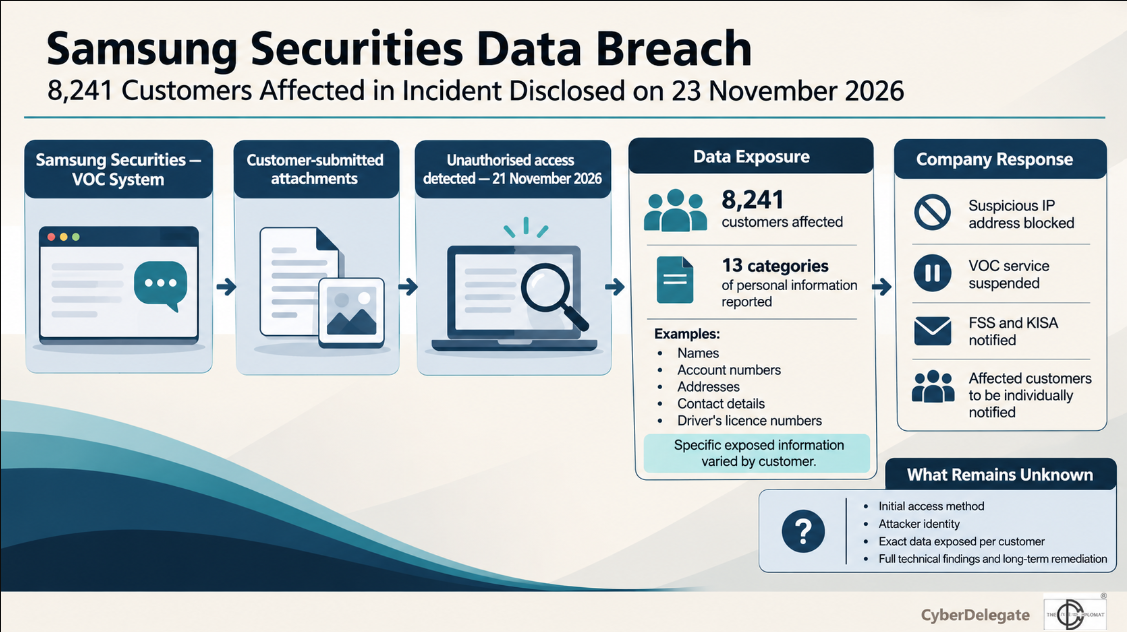
Samsung Securities said it detected signs of unauthorised external access to its VOC system on 21 November 2026. The system allows customers to submit feedback, complaints and service-related enquiries through the company's website.
Its subsequent investigation found that some files attached to customer submissions had been exposed. The company reported that personal information belonging to 8,241 customers was affected.
The exposed information covered 13 categories of personal data, including names, securities account numbers, addresses, contact details and driver's licence numbers. The specific information exposed varied by customer, depending on the contents of the submitted files. This does not mean that every affected customer had all 13 categories of information exposed.
Samsung Securities said the incident involved files submitted through the VOC service. Customers who had not used the service were reportedly unaffected, according to the company's disclosure.
The company's response
Following the discovery, Samsung Securities said it blocked the suspicious IP address and suspended the affected VOC service. It also reported the incident to South Korea's Financial Supervisory Service (FSS) and the Korea Internet & Security Agency (KISA).
The company said it was investigating the circumstances and cause of the breach while reviewing its wider security systems to determine whether other systems had been affected.
Samsung Securities also said it would notify affected customers individually about the specific information exposed in their respective cases. Reports indicate that customers can also use a personal information leak inquiry facility on the company's website to check the information involved.
The company has advised customers to remain alert to potential voice-phishing attempts and suspicious messages. It has stated that compensation will be considered if actual damage resulting from the incident is confirmed, in accordance with relevant laws and internal standards. This is a conditional commitment, not confirmation that compensation will automatically be provided to every affected customer.
What remains unclear?
Several important details have not yet been established in the public disclosures reviewed.
These include the precise method used to gain access, the identity of the unauthorised party, the full circumstances surrounding the exposure and the extent of any additional systems that may have been affected.
The disclosures identify the VOC service and customer-uploaded attachments as the affected area. They do not report unauthorised trading or the theft of customer funds. However, the full technical scope remains subject to the company's investigation.
There is also no publicly confirmed evidence in the reporting reviewed that the exposed information has already been used for fraud or identity theft. The possibility of phishing, impersonation or other misuse remains a concern rather than an established consequence of this incident.
Why customer-facing systems matter
The incident raises a broader security consideration for financial institutions: systems outside core banking, brokerage or trading platforms can still hold information that carries significant personal and financial risk.
Customer feedback portals, complaint forms and support channels often collect documents submitted to verify identities, explain account issues or support service requests. Depending on what customers upload, these systems may accumulate sensitive information that requires strong access controls, monitoring, retention policies and protection against unauthorised access.
The fact that the reported exposure involved a customer-facing service rather than a confirmed compromise of a core trading system does not make the incident insignificant. Security controls should reflect the sensitivity of the information a system stores and processes, not simply its position within an organisation's technology architecture.
For financial institutions, this also reinforces the need to assess externally accessible services and supporting data repositories as part of their wider security reviews.
What happens next?
The investigation will need to establish how the unauthorised access occurred, whether the exposure extended beyond the identified attachments and what additional safeguards are required.
For affected customers, the immediate concern is understanding exactly which information was exposed and remaining cautious about unexpected calls, emails or messages that refer to their accounts or personal details. Any communication requesting credentials, verification codes or financial action should be independently verified through official company channels.
The incident is a reminder that the protection of financial customer information cannot stop at the systems responsible for transactions. The services that support customer communication and documentation can also become consequential points of exposure.
Sources:
This brief was prepared with AI assistance from the sources above and reviewed by our editors.
Sources
Keep reading

Southeast Asia’s Scam-Centre Crisis Is Becoming a Test of Cyber Diplomacy
Southeast Asia’s scam-centre crisis is testing the region’s ability to turn cyber diplomacy into action. From ASEAN–China commitments to wider regional cooperation, the challenge now lies in enforcement, financial disruption and victim protection.
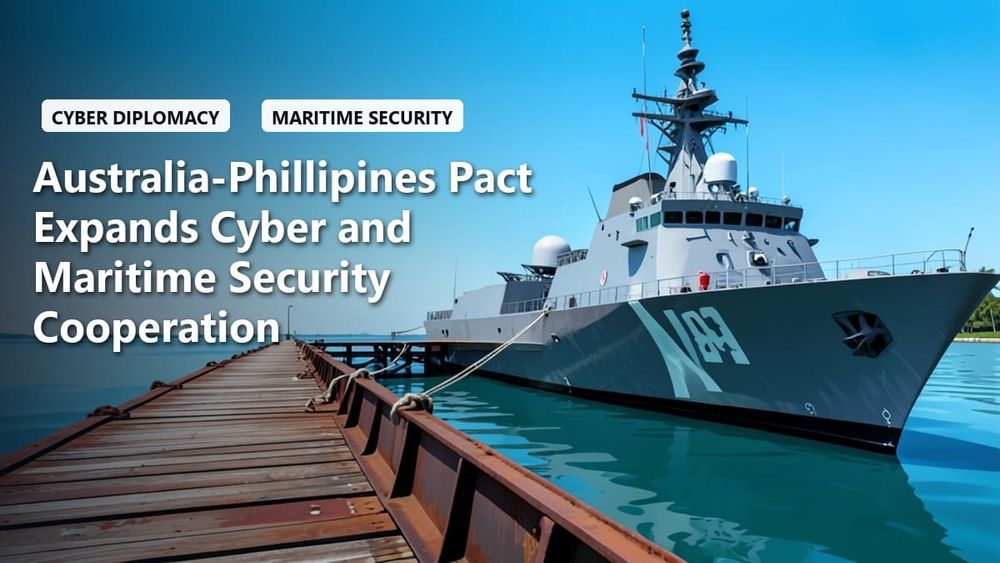
Australia–Philippines Pact Expands Cyber and Maritime Security Cooperation
Australia and the Philippines have signed a defence cooperation arrangement that brings cyber defence and secure communications into a wider regional security framework, highlighting the importance of protecting maritime infrastructure and critical systems across the Indo-Pacific.
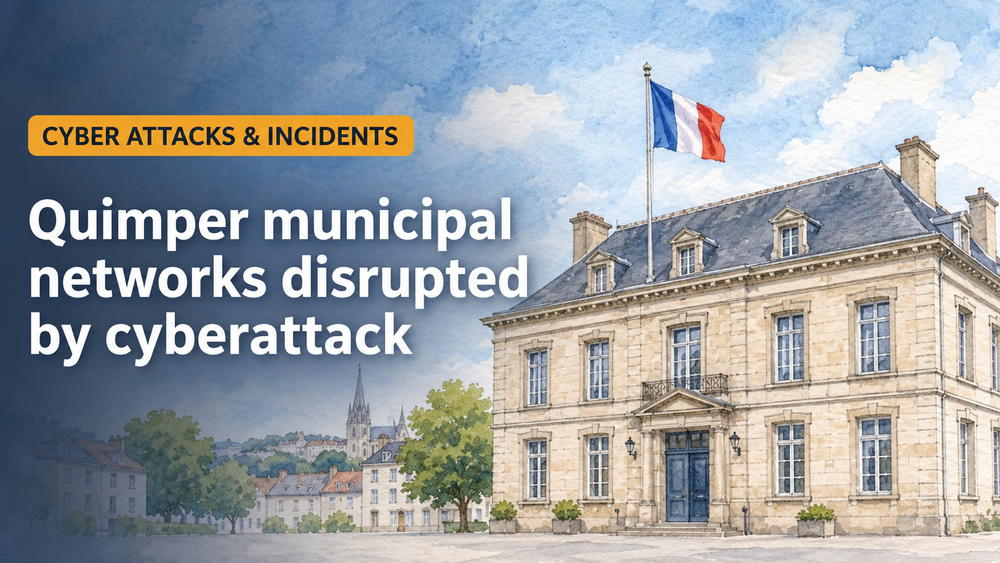
Quimper Municipal Networks Disrupted by Cyberattack Amid Rising Threats to Government Infrastructure
A cyberattack disrupted Quimper's municipal networks on 23 November, adding to growing concerns over attacks targeting local government infrastructure in France. The incident highlights the challenges of protecting public services as cyber threats continue to evolve.