
Stalkerware: The Invisible Crime Hiding on Millions of Phones
By Sanjana Rathi
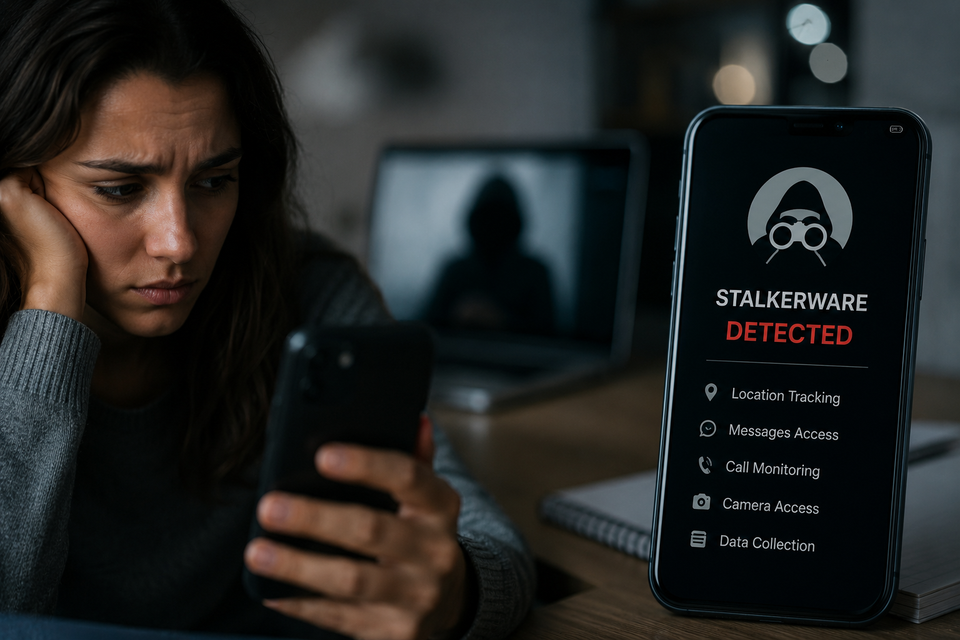
Most crimes have a clear moment you can point to — a break-in, a stolen wallet, a physical assault. Stalkerware doesn't work that way. It's a form of abuse that unfolds silently, inside a device someone carries with them every day, and that quiet, ongoing nature is exactly what makes it so difficult to recognize, investigate, and stop.
A Crime That Doesn't Look Like One
Stalking, in general, suffers from a credibility problem that stalkerware inherits and makes worse. Unlike domestic violence involving visible physical harm, stalking behavior is often dismissed as an overzealous, if unwelcome, version of ordinary courtship — repeated calls, messages, gifts, and attention from someone pursuing a romantic interest. Taken individually, these acts can look harmless, even flattering, to an outside observer, including the police. What transforms them into a crime is the pattern and the intent: when a course of conduct is designed to instill fear rather than express affection, it becomes a means of terrorizing a victim, not courting one.
This is precisely the blind spot investigators run into. There is no single "stalker profile" to match against, no consistent warning sign that applies across every case. When overt violence does eventually occur, the months or years of stalking behavior that preceded it are often not treated as significant on their own — even though, in hindsight, they were the clearest signal available.
Stalkerware compounds this problem by moving the entire pattern onto a device the victim carries everywhere, where it's designed specifically not to be noticed. And it's growing fast: spyware and stalkerware detections rose 51% in a recent one-month period compared with the first two months of the same year — a sharp signal that this isn't a fringe problem, but an expanding one.
What Stalkerware Actually Is
Stalkerware refers to commercially available apps and software installed on a person's device — almost always without their knowledge or consent — that let another person monitor their calls, messages, location, browsing activity, and more. Unlike traditional malware built by anonymous criminal operations, stalkerware is often installed by someone the victim knows personally: a current or former partner, a family member, someone with direct physical access to their phone.
Signs Your Device May Be Compromised
Because stalkerware is built to run quietly in the background, most victims first notice something is wrong through indirect symptoms rather than an obvious red flag. Three signs are worth paying attention to:
Unexplained performance problems. A phone that suddenly runs slower, crashes more often, or freezes unexpectedly — with no clear cause — may be running hidden monitoring software in the background.
Settings that changed without you. A new browser homepage, unfamiliar icons on the home screen, a default search engine you didn't set, or any other configuration change you don't remember making are all signs worth investigating.
Strange pop-ups or error messages. A sudden flood of pop-ups or error alerts from apps that have always worked normally before can indicate that something has been added to the device that shouldn't be there.
None of these signs is proof on its own — phones develop ordinary glitches too — but together, or appearing suddenly after a relationship has become tense or ended, they're worth taking seriously.
Prevention and Basic Cyber Hygiene
The most effective defense against stalkerware is largely the same as good general device security, applied consistently:
- Practice basic cyber hygiene — strong, unique passwords, regular software updates, and caution about what gets installed.
- Secure your phone against unauthorized physical access. Most stalkerware requires someone to physically handle the device, even briefly, to install it.
- Install a reputable antivirus product built for mobile devices, since many can specifically detect known stalkerware.
Removing Stalkerware Manually
If you suspect stalkerware is already on your device, here's a general process for identifying and removing it:
- Reboot into safe mode. Hold down the power button until the power options appear, then long-press "Power off" until the option to reboot into safe mode shows up, and confirm.
- Review your installed apps. Once in safe mode, go to Settings and open Apps (or Apps & Notifications). Look carefully through the list for anything unfamiliar.
- Remove anything suspicious. If you find an app you don't recognize or can't explain, uninstall it. If you're unsure whether an app is legitimate, search its name — if it's a known stalkerware tool, you'll often find others reporting the same issue.
A note of caution: if you believe you're actively being monitored by someone dangerous, removing the app can alert them that you've discovered it, which may escalate risk. In that situation, safety planning (below) should come before removal.
The Psychological Toll
The technical side of stalkerware is only part of the story. Victims commonly experience significant anxiety, and that anxiety is frequently accompanied by guilt and self-blame — thoughts like "I'm a nobody," "I'm a loser, that's why this is happening to me," or "I'm just unlucky." These self-directed narratives are a common response to sustained abuse, and they compound the harm: the more a person blames themselves, the more anxious they become, and the harder it becomes to reach out for help or even name what's happening as abuse.
This is worth stating plainly: none of this is the victim's fault, and self-blame — however common — is not an accurate read of the situation. It's a symptom of the abuse, not a reflection of reality.
Getting Help
The first and most important step is talking about it — with a trusted friend, family member, professional, or an organization built specifically for this issue, such as the members of the Coalition Against Stalkerware. Taking legal advice about your rights is also an important early step, since stalking and unauthorized surveillance carry legal consequences in most jurisdictions. Reaching out to a therapist can feel difficult, especially with the self-blame described above, but professional support is specifically equipped to help work through both the practical and emotional dimensions of this kind of abuse.
Building a Safety Plan
Leaving an abusive situation can be a genuinely dangerous moment, which is why safety planning matters as much as removing the software itself:
- Contact a domestic violence hotline or shelter for guidance specific to your situation. Make the call when the abuser isn't present — from a friend's house or another safe location, not from a device or place they can monitor.
- Prepare an emergency bag with essentials — extra clothing, keys, important documents, medications, and money — and keep it somewhere safe and accessible on short notice.
- Know your exit plan in advance: exactly where you'll go and how you'll get there, decided before you need it, not in the moment.
Protecting Your Communication and Location Going Forward
An abuser with access to monitoring tools can track far more than messages. A few practical precautions:
- Be cautious with phone use. Calls can be intercepted, and an abuser may check caller ID, phone bills, or texting history directly.
- Use a different computer when seeking help. A home computer may be compromised with spyware monitoring email and browsing activity — a library, workplace, or friend's computer is safer for anything sensitive.
- Check for GPS tracking devices, particularly in a shared vehicle.
- Change passwords frequently, choosing ones the abuser couldn't reasonably guess based on shared history.
- Clear browsing history regularly, following your browser's instructions for doing so.
The Bottom Line
Stalkerware is difficult to detect precisely because it's designed to be — quiet, embedded in an ordinary device, and often installed by someone the victim trusted. Recognizing the signs, understanding that the resulting anxiety and self-blame are symptoms of abuse rather than truths about the victim, and having a concrete safety plan before acting are the three pillars that make it possible to respond safely. No one experiencing this is alone, and reaching out — to a hotline, a trusted person, or an organization built for exactly this problem — is the step that makes every other step possible.
This article discusses domestic abuse and stalking. If you are experiencing this yourself, support is available through domestic violence hotlines and organizations such as ours. Write to info@thecyberdiplomat.com
Member discussion