
Thailand Tightens Cyber‑Defence After European Hacker Attacks
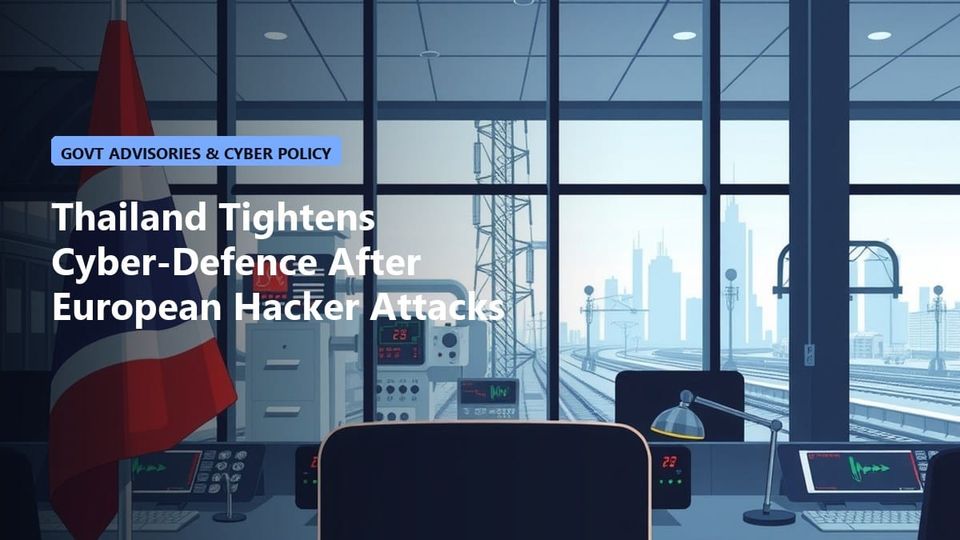
Thailand’s prime minister has ordered a rapid escalation of cyber‑defence measures.
Background
On 8 November 2026 Prime Minister Anutin Chanvirakul instructed the National Security Council (NSC) to work closely with the Cybersecurity Agency and other security units. The directive aims to strengthen protection of the country’s digital infrastructure, especially the systems that control essential services such as energy, transport, health and food supply.
The order was prompted by a series of hacker intrusions reported in several European nations earlier in November. Those incidents targeted both ordinary digital platforms and industrial control systems, raising concerns that similar tactics could be used against Thailand’s own critical‑infrastructure networks.
How the New Measures Work
The government’s response focuses on prevention rather than reacting to an active breach within Thailand. Agencies responsible for critical infrastructure have already drafted a national cyber‑security readiness plan. Under the new directive they are expanding real‑time monitoring, improving alert mechanisms and coordinating threat‑intelligence sharing across ministries.
Private‑sector operators that run public‑service systems, Internet‑of‑Things (IoT) devices and other connected machinery are also asked to conduct a thorough review of their security posture. The aim is to identify and close vulnerabilities before they can be exploited, mirroring the steps taken by the public sector.
Who Is Affected
- Government agencies overseeing energy, transport, health, food supply and other public services.
- Critical‑infrastructure operators such as power plants, water treatment facilities and railway networks.
- Private‑sector companies that provide digital platforms, IoT solutions or manage public‑service technology.
All of these entities could face disruption if attackers manage to compromise the control systems that keep essential services running. The prime minister warned that cyber threats can impact not only data but also the physical delivery of food, health care and energy.
Why It Matters
Thailand relies heavily on interconnected digital systems to deliver everyday services to its citizens. A successful intrusion into a power grid or water treatment plant could cause outages, safety hazards and economic loss. By tightening monitoring and urging private firms to patch vulnerable devices, the government hopes to reduce the attack surface that foreign hackers have previously exploited in Europe.
While the specific European incidents remain unnamed, the pattern of targeting control‑system environments suggests a growing trend of “cyber‑physical” attacks. These aim to manipulate real‑world processes, making the preventive steps outlined by Thailand’s leadership especially relevant for any organisation that depends on automated or remotely managed equipment.
What It Means for the Public
For ordinary citizens, the measures are largely invisible but intended to keep essential services reliable. Strengthened defenses should lower the risk of service interruptions that could affect daily life, such as power cuts or transport delays. The government’s public communication also serves to raise awareness that cyber threats extend beyond data theft to the continuity of basic utilities.
Overall, the coordinated effort signals Thailand’s recognition of the evolving cyber threat landscape and its commitment to safeguarding the digital backbone of the nation.


Member discussion