Maritime Cybersecurity 2026: From Compliance Checkbox to Operational Imperative
Inmarsat's NexusWave achieves ClassNK Type Approval — as the industry confronts a 103% surge in attacks and a generational shift in how cyber resilience is defined A
 CyberDelegateOfficial magazine of The CyberDiplomat
A leading platform for cyber diplomacy, cybersecurity, AI governance, critical infrastructure protection, and international digital policy cooperation.
Front pageDesk
Inmarsat's NexusWave achieves ClassNK Type Approval — as the industry confronts a 103% surge in attacks and a generational shift in how cyber resilience is defined A
Analysis · June 12, 2026 The FIFA World Cup 2026 kicks off today. The cyber threat landscape around it is unlike anything a sporting event has faced before: 10,
When adversaries can empty shelves without firing a shot, food security and cybersecurity become the same fight June 11, 2026 Introduction: The Weapon You Never See Coming Imagine
DIGITAL GOVERNANCE & GEOPOLITICS Submarine cables carry over 99% of the world's international data. They are jointly depended upon by every nation — and increasingly weaponised by
THREAT INTELLIGENCE BRIEF | THE CYBERDIPLOMAT | JUNE 4, 2026 As the world's airline chiefs convene in Rio de Janeiro for the 82nd IATA AGM, the Embraer story
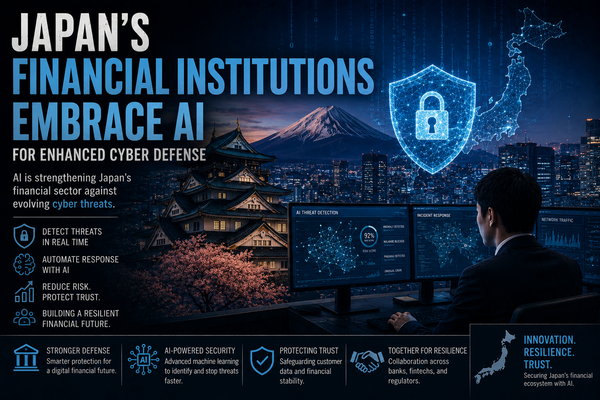
In a significant move towards bolstering cybersecurity within its financial sector, Japan’s government and major financial institutions have recently been granted access to OpenAI’s GPT-5.
What the Article Argues The core thesis is straightforward and well-supported: Europe's clean energy transition has created a massive, largely unacknowledged digital security vulnerability. The
Solar panels generate electricity. They also generate data, run on software, and connect to networks. That makes them a target. Michigan just decided to do something about it.
The US terrorist designation of the PCC and Red Command is a law enforcement milestone. But the more urgent security story is how these organizations have turned the
Spain's Zapatero corruption scandal is a window into something larger: what happens when geopolitical alignment decisions are shaped by influence networks rather than national interest—and
In the heart of Tallinn, Estonia, inside the unassuming walls of Cyber Range 14, one of the most important modern military exercises unfolded without the sound of artillery,
Europe’s energy infrastructure is increasingly becoming one of the most strategically vulnerable targets in modern geopolitical conflict. What was once viewed primarily as a network of pipelines,
As nations accelerate digital transformation and critical infrastructure modernization, cybersecurity is rapidly becoming one of the most strategic areas of international cooperation. Thailand’s growing engagement with French